
SC-SIP – Building System
SC-SIP is a modern building system based on structural sandwich panels that combine load-bearing functionality and high thermal insulation in a single element. It enables fast, precise, and energy-efficient construction of low-energy and passive houses, with an emphasis on strength, airtightness, and long-term durability.
What is the SC-SIP Building System Made Of?
The foundation of the SC-SIP building system is the structural sandwich panel. It consists of two high-strength OSB TOP4 boards and an insulating core of expanded self-extinguishing polystyrene (EPS) or PIR foam, which ensure excellent thermal insulation properties while providing high structural stability for the entire building.
The SC-SIP system by SIPCORE represents a new generation of modern timber-frame construction. It excels in extraordinary construction speed, prefabrication precision, versatility, and superior strength. Thanks to its excellent airtightness and thermal parameters, it is an ideal solution for low-energy and passive house construction, offering cost savings both during assembly and throughout the building’s future operation.
Why Choose SIP Panels from SIPCORE
SIP panels from SIPCORE represent a modern solution for fast, precise, and energy-efficient construction. We combine precise engineering, accurate manufacturing, and rapid assembly to create high-quality structures with long-term durability and minimal thermal loss.
Every project is custom-designed with a focus on structural integrity, detailing, and efficient material use. Production takes place under strictly controlled factory conditions, ensuring consistent quality and the dimensional accuracy of every panel. The result is a system that fits together perfectly on-site, significantly reducing overall construction time.
SIP panels by SIPCORE are eco-friendly, energy-efficient, and engineered to meet the demands of both modern residential and commercial construction. Choose a solution that saves time, costs, and energy—choose SIPCORE.
The History of SIP Panels
SIP Panels: A Modern Construction Method with a Proven History
SIP panels (Structural Insulated Panels) originated in the USA as early as the 1930s in response to the need for more efficient and economical construction. Early experiments were conducted under the leadership of the legendary architect Frank Lloyd Wright and researchers from the Forest Products Laboratory, who explored the use of wood boards and insulating materials in prefabricated structures. The goal was to create a building element that combined load-bearing functionality with thermal insulation while significantly accelerating the construction process.
A significant shift occurred after World War II, when the demand for rapid and affordable housing surged. The technology gradually advanced, with improvements in both insulation materials and the quality of structural boards. The mass adoption of SIP panels followed in the 1970s during the energy crisis, as the need to reduce building energy consumption and minimize thermal loss became a top priority.
In the following decades, the technology continued to evolve—introducing more precise manufacturing processes, higher-quality OSB boards, and new types of insulating cores (EPS, PUR, PIR). A strong emphasis was placed on airtightness and the elimination of thermal bridges. Thanks to these innovations, SIP panels have become a stable, technically proven, and highly reliable building system.
Today, SIP panels are widely used in North America, Scandinavia, and Western Europe, where they are considered a standard solution for low-energy and passive homes. They are also steadily gaining a prominent position in Slovakia and the Czech Republic, where the demand for fast, precise, and energy-efficient construction continues to grow. This technology is field-proven over the long term and constantly evolves to meet modern requirements for sustainability, energy efficiency, and high-quality living.
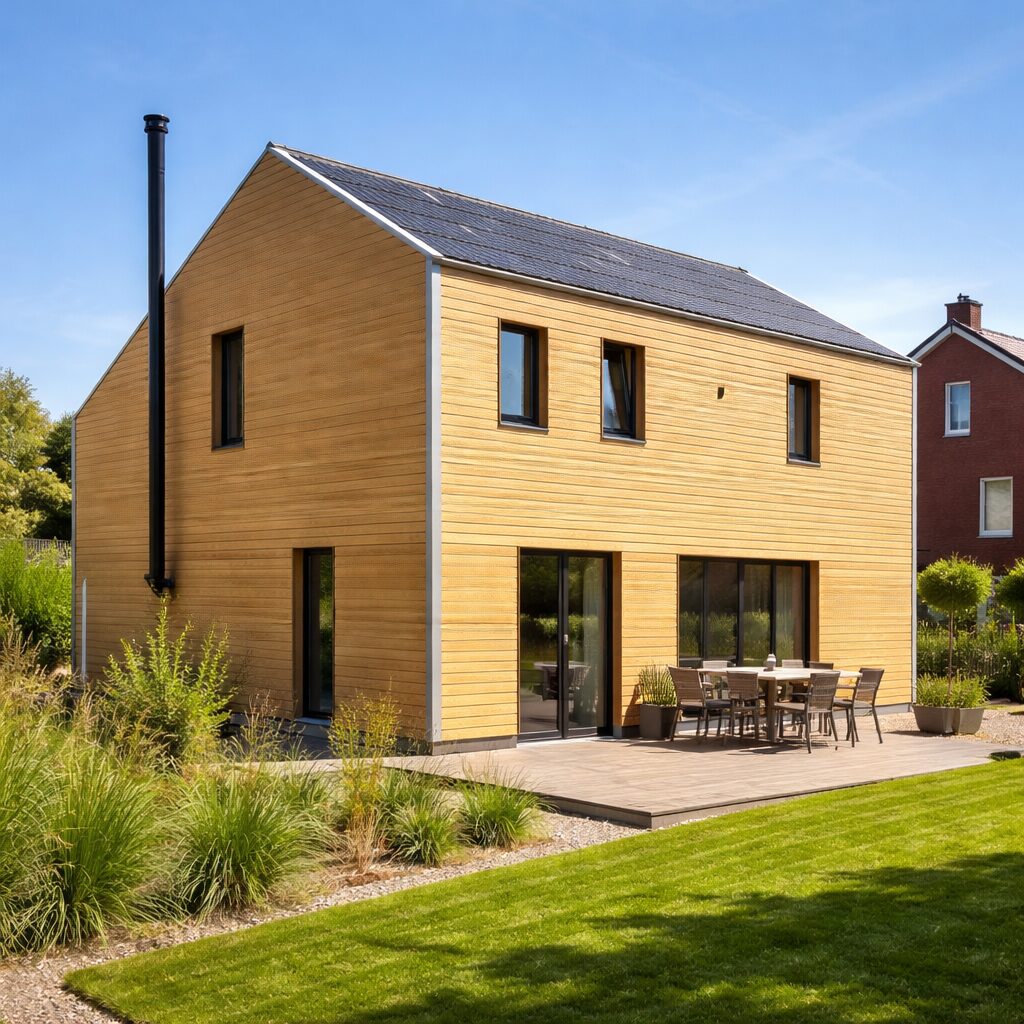
Design and Manufacturing Process
The certified building system by SIPCORE is manufactured under strictly managed and controlled factory conditions.
The certified SC-SIP building system is produced in a high-precision environment, ensuring maximum quality. The manufacturing process consists of several stages, with a standard production timeframe ranging from 4 to 8 weeks.
4 Stages of Production:
-
DESIGN & ENGINEERING
-
OPTIMIZATION
-
MANUFACTURING
-
ASSEMBLY
Where Can the SC-SIP Building System Be Used?
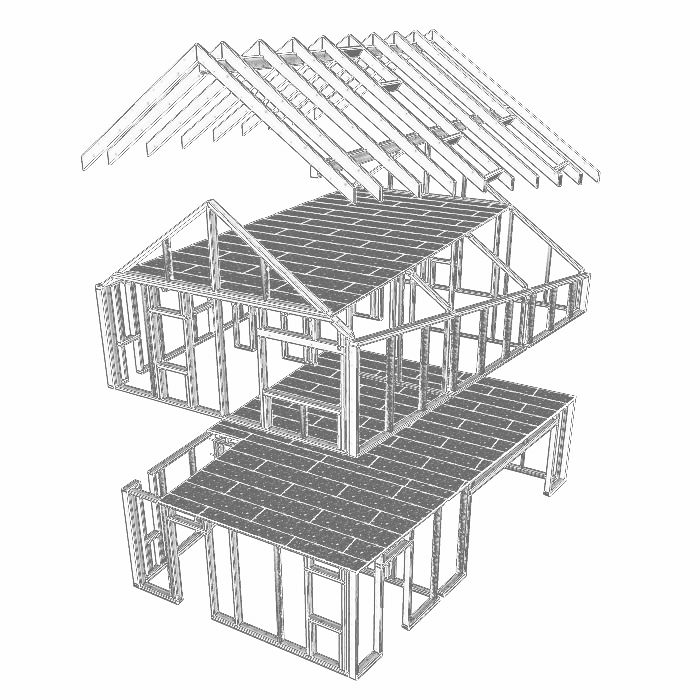
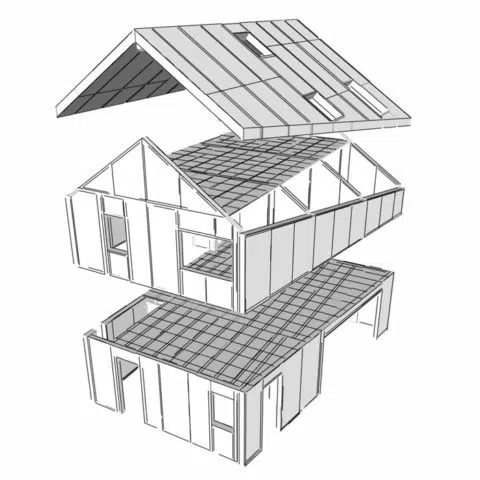
With the SC-SIP building system, we provide comprehensive solutions for foundations, external perimeter walls, internal partitions, ceilings, and both flat and pitched roofs.
It is a versatile solution suitable for the construction of:
-
Residential Homes
-
Apartment Buildings
-
Office & Commercial Buildings
-
Industrial Facilities
-
Schools & Kindergartens
-
Recreational Facilities & Cabins
-
Houseboats
The SC-SIP system is also an ideal solution for floor additions and vertical extensions.
Building Types Constructed with the SC-SIP System
We design every project individually—with a focus on structural integrity, precision detailing, and the efficient use of SIP materials. The result is a high-precision system that fits together perfectly on-site, significantly reducing construction time.
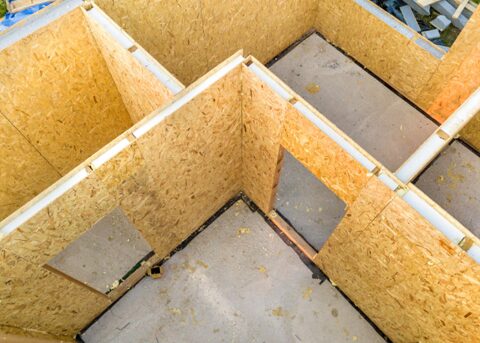
Panelized
Buildings
The SC-SIP building system from KKP Trade consists of individual, pre-fabricated, and labeled panels. Panel assembly is carried out according to a detailed installation plan, which is included as part of every custom-delivered project.
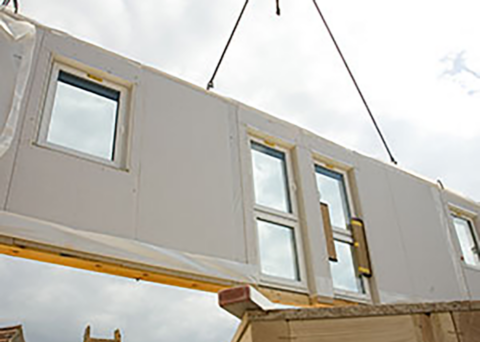
Prefabricated
Structures
A key advantage of the SC-SIP system is its ability to be pre-assembled into individual prefabricated building units. These prefab structures meet all building criteria and rigorous technical standards required for modern construction.
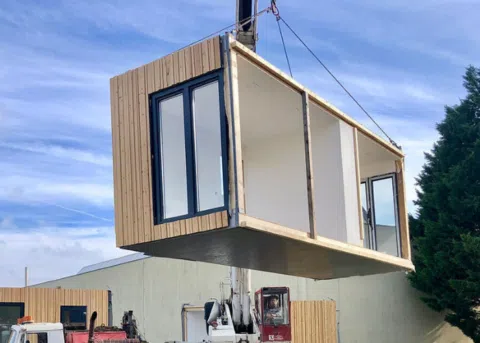
Modular
Buildings
Modular buildings are energy-efficient or passive structures manufactured in a factory as complete individual “modules.” The panelized structure and solid insulating core ensure high robustness for each module and unrivaled thermal insulation properties.